Referral CRM
Stop chasing referrals through texts, Teams, and voicemail.
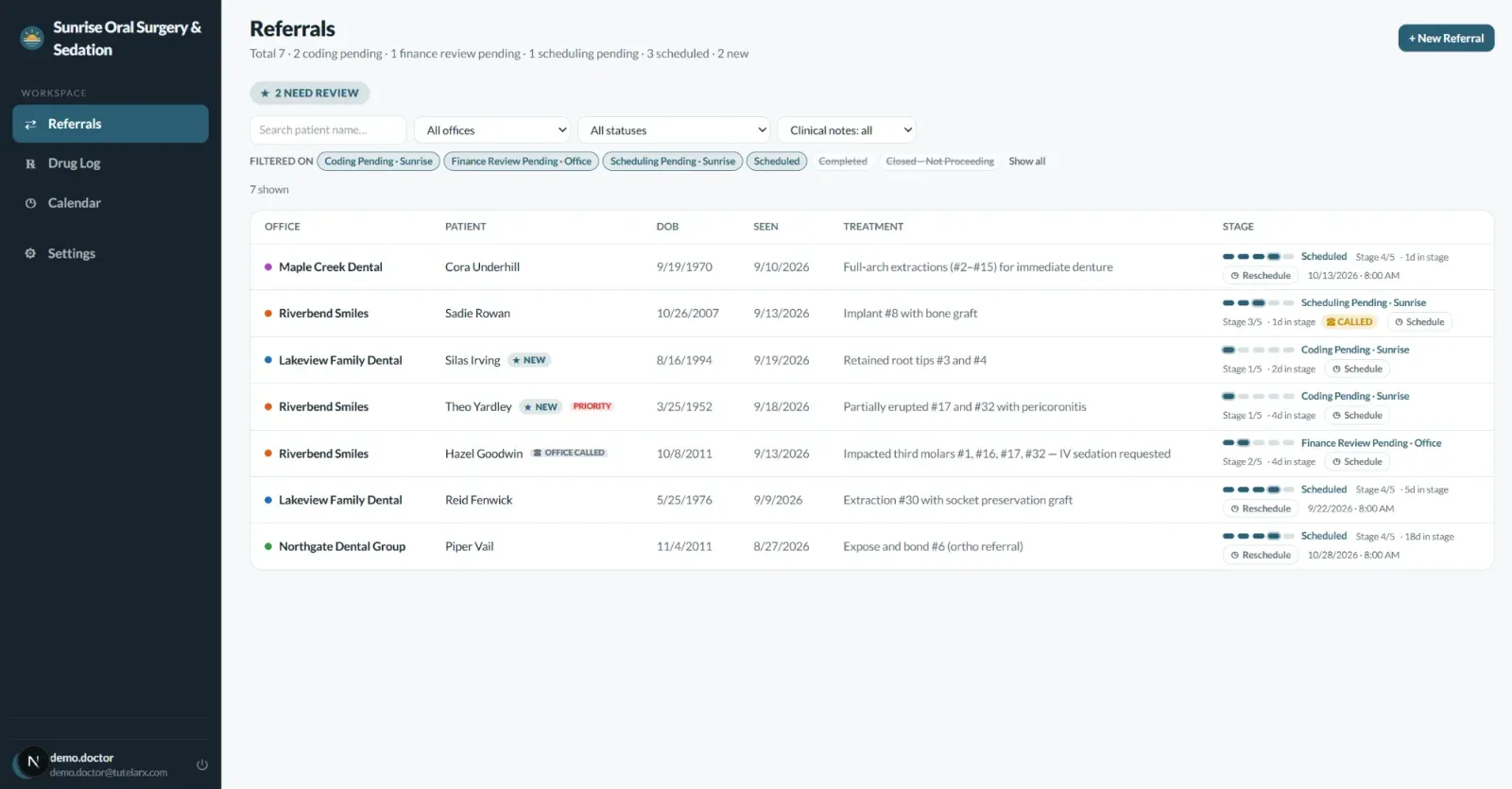
TutelaRx gives each referring office its own portal to send you patients. Every case lands on one board. Your referring offices see where their patient is without calling your front desk.
$350 a month per practice, month to month. Both modules, $500. See pricing
-
8 offices
referring into one pipeline at Odyssey. Read the story
-
“One centralized workflow. That was night and day for us.”
Dr. Eric Egan, Odyssey Oral Surgery & Sedations
-
Typed once
Patient info is typed once, ever. The referral pre-fills the drug log.
Before and after, in the doctor's words.
Odyssey Oral Surgery & Sedations takes referrals from eight offices. This is what tracking them was like before TutelaRx, and what it is like now.
Before
Eight referring offices, each with its own process.
“There are texts, Teams messages, Google messages. It was always one person trying to track down where a referral came from.”
Asked whether patients slipped through the cracks:
“Oh yeah, easily. You overlook something, or you call and never get a response. Then they're lost because they're so far back in the referral system.”
“It looks bad on both sides. For the patient, it's a terrible experience. Between us and the dentist, it's very unprofessional.”
After
One portal for every office. One board for every case.
“It's mindless now. Once we diagnose the case and send it back through the app, it's off our mind. We know we did our part.”
How a referral moves through TutelaRx.
From the referring office's first click to surgery day.
- 1
The referring office sends the patient.
They log in to their own branded portal and enter the patient. No text. No voicemail. Nothing for your front desk to retype.
- 2
You move the case through the stages.
Submitted, coding, finance review, scheduled, completed. If a case is not going forward, close it with a reason. Every referral has a stage, and every stage has a count.
- 3
The referring office sees live status.
They open the portal and see where their patient is. They see their patients only. No call to your office.
- 4
Questions stay with the case.
Two-way comments go to the referring office. Internal-only notes stay with your team. Nothing gets lost in a text thread.
- 5
On surgery day, the drug log is already filled in.
The referral pre-fills the patient in the drug log. Name, date of birth, and the rest are typed once, ever.
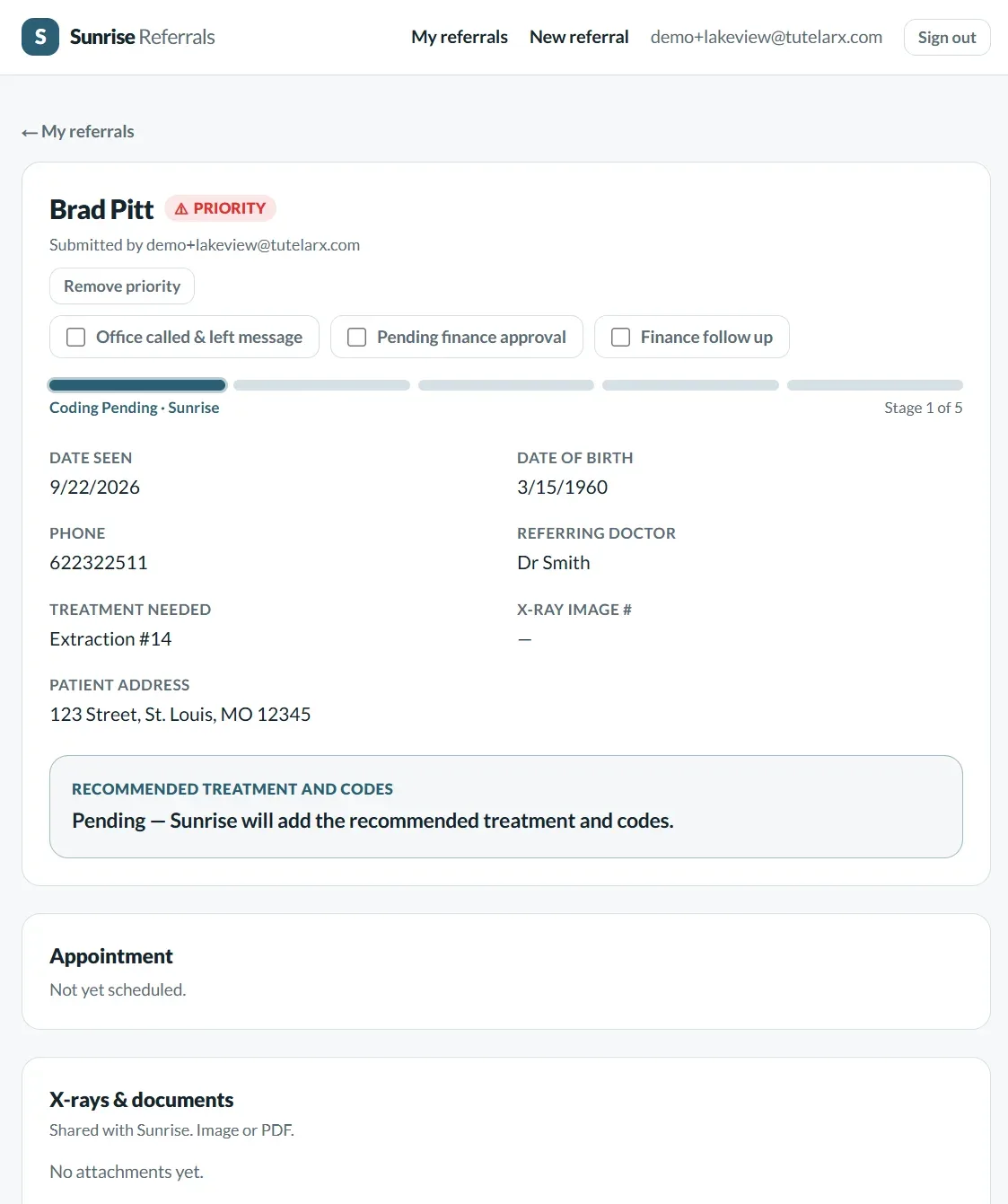
Every referral sits in one of these. You always know which.
- Submitted
- Coding
- Finance review
- Scheduled
- Completed
Closed, not proceeding for any case that does not go forward. It keeps a reason.
Both sides look at the same case.
The referring office gets a window into their patients. Your front desk gets the whole board.
What your referring offices get
- Their own branded login.
- Their patients only. They never see another office's cases.
- Live status on every patient they sent you.
- Comments that go straight to your team, and answers that come straight back.
What your front desk gets
- One board with every referral from every office.
- A count at each stage, so you know what is waiting on coding, finance review, or scheduling.
- A reason on every closed case, so nobody has to guess later.
- Nothing typed twice. The referral fills in the drug log on surgery day.
Scheduled referrals land on the calendar.
When a referral moves to scheduled, it shows up on the surgery calendar. Each office has its own color, the same colors the drug log uses. Set the days you work at each office and add appointments from the same screen.
Book a 15-minute demo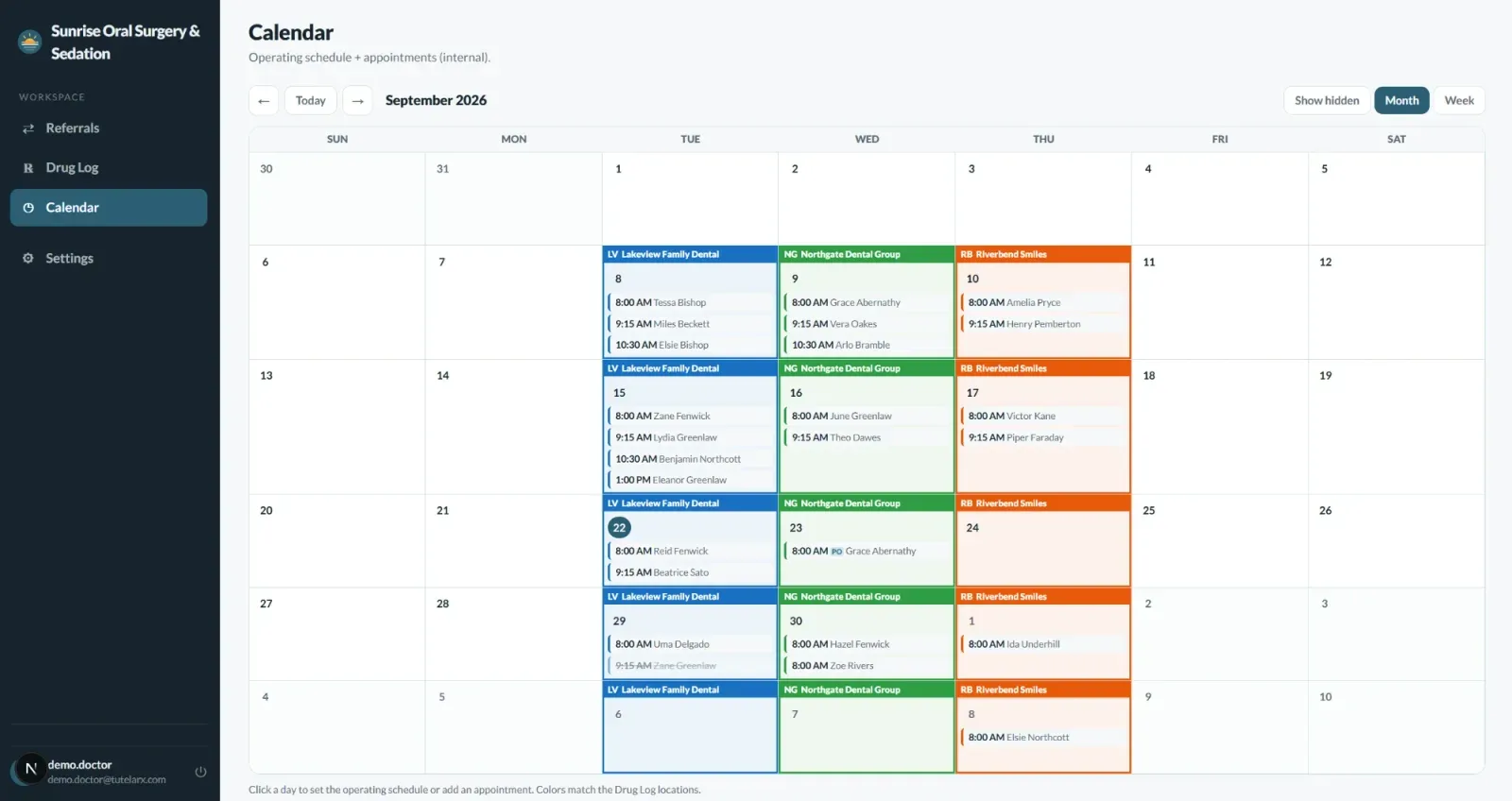
What it costs.
Referral CRM is $350 a month per practice. Bundled with the Drug Log, both modules are $500 a month.
$1,000 white-glove setup, waived with an annual commitment. No long-term contract. BAA included.
See the pipeline on your referrals.
A 15-minute demo on your own workflow. Bring your office manager.
Book a 15-minute demo“For someone with my personality, the biggest selling point is organization, with everything in one spot... I think we would have jumped on this eight months ago.”